The quiet after a beloved animal passes can feel unbearable. Their bed is still in the corner. You still listen for their paws in the hallway. If you are looking for pet grief support after loss, you may not need someone to tell you to just move on. You may need space to honor a sacred bond, make sense of what you are feeling, and remember that love does not end when a body does.
For many pet parents, grief after loss is not small, simple, or easy to explain to other people. It can come in waves – disbelief, guilt, sadness, anger, numbness, and even relief if your animal had been suffering. All of it can exist at once. None of it means you loved them the wrong way. It means your connection was real.
Why pet grief support after loss matters
When an animal is family, their passing can shake the foundation of daily life. Pets witness our routines, our private moments, our grief, our joy, and the parts of us the world rarely sees. They offer unconditional presence. When they leave, it is not only their physical absence that hurts. It is the loss of a relationship, an energy, and a steady source of comfort.
This is why pet grief deserves real support. Too often, people are told to replace a pet quickly or to minimize the pain because it was just an animal. That kind of response can deepen isolation. True healing begins when your grief is respected for what it is – love with nowhere obvious to go.
Support matters because grief can stir up unanswered questions too. Did they know how much I loved them? Did I wait too long? Did I make the right decision? Are they still with me in some way? For many sensitive and spiritually open pet parents, these are not passing thoughts. They are part of the healing process.
There is no right way to grieve your pet
Some people cry every day. Some go numb and function on autopilot. Some need to talk about their animal constantly, while others cannot say their name out loud for weeks. Grief is deeply personal, and with animal loss, it often follows its own rhythm.
You may also notice that grief after losing a pet feels different from other forms of loss. Animals love without pretense. They do not complicate affection with mixed messages or emotional distance. Because of that, the bond can feel especially pure. Losing that presence can reach places in the heart that are hard to put into words.
It also depends on the circumstances of the loss. A peaceful passing at the end of a long life may still feel devastating. A sudden death can bring shock and trauma. Euthanasia can carry compassion and guilt side by side. If your pet went missing before passing, the grief may include prolonged uncertainty and layered heartbreak. Your experience does not need to match anyone else’s in order to be valid.
What gentle support can look like
The best pet grief support after loss is not always about fixing pain. Often, it is about creating a safe place for pain to move. That may look practical at times, and deeply spiritual at others.
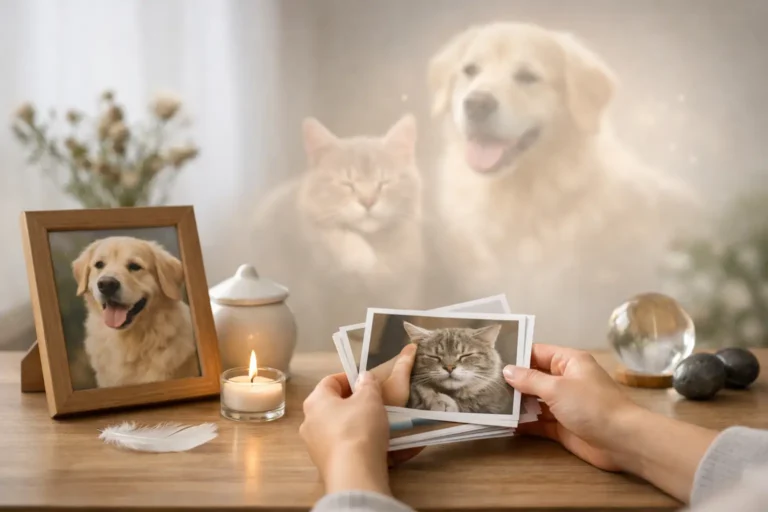
For some, support begins with simple rituals. Lighting a candle. Making a small altar with a photo and collar. Writing a letter to your pet. Sitting in the places they loved and speaking to them from your heart. These acts may seem small from the outside, but they can bring the nervous system out of shock and into remembrance.
For others, support means being witnessed by someone who understands that the bond is ongoing. Grief softens when you do not have to defend it. Talking with a compassionate friend, therapist, grief counselor, or intuitive guide can help you process not only the loss itself, but the unanswered emotions attached to it.
Body-based care matters too. Grief lives in the body. You may feel heaviness in your chest, nausea, exhaustion, restlessness, or brain fog. Drink water. Rest more than you think you should. Step outside. Place a hand on your heart when waves of sadness hit. This is not about doing grief perfectly. It is about caring for yourself while love rearranges your inner world.
The spiritual side of losing an animal companion
If you believe animals are sentient spiritual beings, grief may carry a different kind of longing. You may feel that your pet is still near, yet just beyond reach. You may sense them in dreams, in familiar habits, in signs that arrive at just the right moment. This can be deeply comforting, and it can also make you question yourself.
You are not wrong for feeling your animal’s presence after they pass. Many pet parents experience continued connection. Sometimes it comes as an inner knowing, a sudden feeling of peace, a familiar energy in the room, or a dream so vivid it feels like a visit. Not every moment needs to be analyzed. Some experiences are simply meant to be received.
Spiritual support can be especially meaningful when grief is tangled with uncertainty. If you are holding regret, confusion, or questions about your pet’s passing, receiving intuitive insight may help bring comfort and clarity. A compassionate passed pet reading can offer a sense of connection that eases the ache of separation and helps you hear what they may still want you to know.
At Animal Communication with Tori, this kind of heart-centered support is rooted in honoring the sacred bond between pets and their people. For many grieving pet parents, being able to feel that bond is still alive can bring real peace.
When guilt becomes the loudest part of grief
Guilt is one of the most common and painful parts of pet loss. It often sounds like, I should have seen it sooner. I should have tried another treatment. I waited too long. I acted too soon. Even when decisions were made with love, the mind can search for a different ending.
This is where tenderness is needed most. Guilt often appears when love had to make an impossible choice. Especially with euthanasia, there may be no decision that feels fully clean or easy. You chose from the information, resources, and emotional capacity you had at the time. That does not erase pain, but it can soften self-punishment.
If guilt is overwhelming, speak it out loud. Write it down. Bring it into a safe space where it can be met with compassion rather than silence. Often, what is underneath guilt is grief, helplessness, and profound devotion. Your pet knew your heart more clearly than your fear does now.
How to support children and other pets after a loss
Grief ripples through the whole household. Children may ask direct questions or show their grief through behavior rather than words. Clear, gentle honesty usually helps more than vague explanations. Let them participate in remembrance in ways that feel age-appropriate, like drawing pictures, sharing stories, or saying goodbye in a personal ritual.
Other animals in the home may grieve too. Some search for their companion, sleep more, lose interest in food, or become clingier. Keep routines steady where you can, while giving extra reassurance and presence. Some pets need more quiet. Others need more closeness. Watch what they are asking for without forcing them to grieve in the same way you do.
Signs you may need deeper pet grief support after loss
Grief is not a problem to solve, but there are times when more support is wise. If weeks pass and you feel frozen in panic, unable to function, or consumed by traumatic images of your pet’s final moments, extra care can help. The same is true if loss is stirring older grief, depression, or severe anxiety.
Reaching for support is not weakness. It is devotion – to your healing, to your bond, and to the part of you that loved so fully. Some people need practical grief counseling. Some need spiritual connection. Many need both. It depends on what your heart is asking for.
There is also no rule for when to bring another animal into your life. For some, a new pet offers healing. For others, it feels too soon. Another animal will never replace the one you lost, and they are not meant to. Love expands, but timing matters.
Your grief is not evidence that you are broken. It is evidence that your animal mattered, that your life was changed by their presence, and that the bond you shared still deserves to be honored. Be gentle with the part of you that is learning how to love them in a new way.