A dog who stares at the door every evening at exactly the same time. A cat who suddenly sleeps on your chest after weeks of distance. A horse who turns away the moment one specific topic comes up. These are the kinds of animal communication examples that make pet parents pause and wonder, What are they trying to tell me?
If you have ever felt that your animal was sending more than a simple signal, you are not imagining the depth of that bond. Animals communicate constantly through body language, energy, emotion, behavior, and subtle patterns that often carry meaning far beyond basic training cues. When we slow down enough to notice, we begin to hear what they have to say in a different way.
Why animal communication examples matter
For many people, communication with animals is reduced to obvious behaviors – barking, tail wagging, purring, pacing. Those signals do matter. But for loving pet parents, there is often a deeper layer. A behavior can reflect a physical need, an emotional response, a memory, or a shift in the relationship between animal and human.
That is why context matters so much. The same action can mean very different things depending on the animal, the environment, and what else is happening in the home. A dog following you from room to room might be asking for reassurance, showing protectiveness, mirroring your anxiety, or simply enjoying connection. The truth is not always one-size-fits-all.
When you look at examples with an open heart, you start to recognize a fuller picture. You move from guessing to listening. That alone can bring more harmony into your relationship.
12 animal communication examples in everyday life
1. Repeating a behavior at the same time each day
Animals are beautifully attuned to rhythm. When a pet begins doing the same thing at a very specific time, it can point to an unmet need, a remembered routine, or an emotional expectation. A dog who waits by the window at 5 p.m. may be anticipating the return of a family member. A cat who becomes vocal before bedtime may be asking for connection rather than food.
Sometimes this is habit. Sometimes it is attachment. Often, it is both.
2. Sudden clinginess after emotional upheaval
Many animals respond strongly to grief, stress, arguments, illness, or change in the household. If your pet suddenly becomes extra affectionate, follows you closely, or refuses to leave your side, they may be responding to your emotional state as much as their own.
This does not always mean something is wrong with the pet. It may mean they are trying to comfort, ground, or stay connected while the energy around them feels unsettled.
3. Avoiding a person, room, or object
Avoidance is one of the clearest communication signals animals use. A pet who resists entering a room, pulls away from a visitor, or reacts to a new object may be expressing discomfort, sensitivity, fear, or a negative association.
It is easy to dismiss this if the trigger seems harmless to us. But animals experience spaces and people differently. They notice tension, scent, memory, and energetic shifts that humans may miss. Their refusal can be informative, not defiant.
4. Bringing gifts or specific objects
Cats who leave toys on your pillow and dogs who carry one certain item to you over and over are often communicating relationship and intention. Sometimes it is playful. Sometimes it is nurturing. Sometimes it is their way of saying, Pay attention to this, or I want to share something with you.
The object itself can matter. A worn toy may represent comfort. A shoe may carry your scent. A blanket may feel like safety. The message is often emotional before it is logical.
5. Staring with unusual intensity
There is a difference between casual looking and deep, sustained focus. Animals often use eye contact to communicate attention, concern, love, request, or alertness. A pet who stares at you and then toward another area may be trying to direct your awareness. A pet who holds your gaze during a difficult season may be offering steady presence.
Of course, species matters here. With some animals, direct eye contact can also signal stress or boundary setting. The meaning depends on the individual animal and the surrounding cues.
6. Changes in appetite without a clear cause
Appetite shifts can have medical causes, so practical care should always come first. Still, animals also express emotional disruption through eating patterns. A pet who suddenly eats less after a loss, move, or schedule change may be grieving or feeling insecure.
This is where compassion matters. Instead of assuming stubbornness, it helps to ask what has changed in their inner world as well as their outer routine.
7. Vocalizing in a new way
One of the most familiar animal communication examples is vocal sound, but the nuance often gets overlooked. A bark is not just a bark. A meow is not just a meow. Tone, repetition, timing, and circumstance all shape meaning.
A usually quiet cat who begins crying at night may be confused, anxious, lonely, or sensing a shift in the home. A dog who whines only when one family member prepares to leave may be expressing attachment or concern. New vocal patterns deserve gentle attention rather than quick correction.
8. Resting on a certain body part
Many pet parents notice that their dog or cat repeatedly lies against a specific area of the body, such as the chest, stomach, knees, or head. Sometimes this is simple comfort. Sometimes it feels more intentional.
Animals are sensitive to physical and energetic changes. While this should never replace professional medical support, these moments can still feel meaningful. A pet resting on you may be soothing, sensing, or drawing your attention to where care is needed.
9. Acting out after being overlooked
Behavior changes often happen when an animal feels emotionally disconnected. A pet who starts knocking things over, eliminating outside the usual area, or demanding attention at inconvenient times may not be trying to be difficult. They may be expressing frustration, sadness, jealousy, or confusion.
This is especially common after a new baby, new pet, breakup, move, or return to work. Their behavior becomes the message when their feelings are not being met another way.
10. Visiting in dreams or after passing
For grieving pet parents, this can be one of the most tender forms of communication. Many people report vivid dreams, sudden feelings of presence, familiar sounds, or meaningful signs after an animal has crossed over. These experiences often bring peace, warmth, and an unmistakable sense of recognition.
Not every dream is a spiritual message, and not every sign has to be analyzed. But when an experience feels clear, loving, and deeply aligned with your bond, it may be worth honoring rather than dismissing.
11. Returning to one place when lost or unsettled
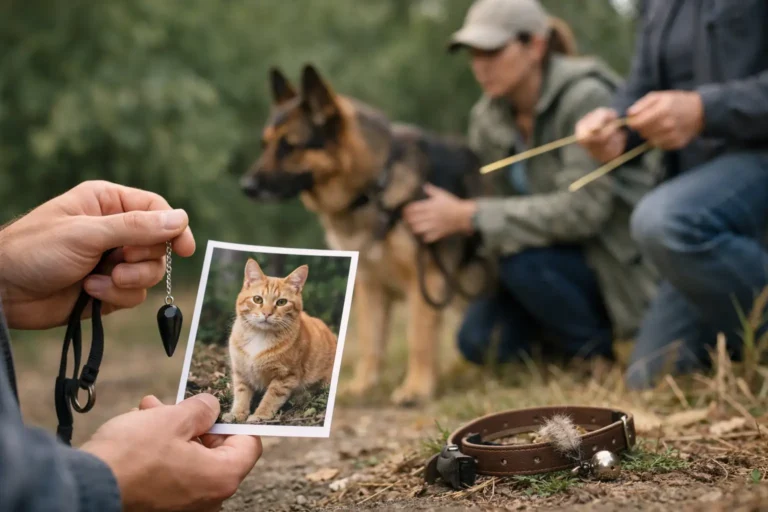
Missing pets sometimes circle back to a location that holds emotional resonance – a porch, a favorite walking path, a familiar yard, or the home of someone they trust. This kind of movement can reflect memory, attachment, and energetic orientation.
Of course, every missing animal situation is unique. Some pets hide when frightened, while others seek out familiar people or scents. There is no universal pattern. But paying attention to emotional landmarks can be just as important as physical ones.
12. Softening the moment they feel heard
One of the most powerful examples is also one of the simplest. An animal who has been restless, guarded, or reactive may visibly soften after being acknowledged. Their breathing changes. Their body relaxes. Their eyes become gentler. It can happen when you speak to them honestly, when you validate what they are feeling, or when their deeper message has finally been recognized.
This kind of shift reminds us that animals do not only want to be managed. They want to be understood.
How to notice animal communication examples more clearly
The first step is presence. Most people do not miss animal communication because they are incapable of receiving it. They miss it because life is loud, schedules are full, and subtle messages are easy to brush aside.
Start by observing without forcing meaning too quickly. Notice patterns. Ask yourself what changed before the behavior changed. Pay attention to emotion, timing, body language, and your own intuition. If something keeps repeating, there is usually a reason.
It also helps to release the need for every message to be dramatic. Some communication is profound and spiritual. Some is wonderfully ordinary. Your pet may be sharing love, discomfort, preference, grief, confusion, or a request for more closeness. All of it matters.
For some pet parents, there comes a point where personal observation no longer feels like enough. If you are facing a painful behavior shift, the loss of a beloved animal, or the fear and uncertainty of a missing pet, outside intuitive support can bring clarity and comfort. Services like Animal Communication with Tori are designed for those moments when your heart knows there is more to hear.
The sacred bond behind these examples
At the center of all of this is a simple truth: animals are sentient beings with feelings, wisdom, preferences, and presence. They are not silent companions moving through our lives without opinion or awareness. They are constantly in relationship with us.
That relationship is not always neat. Sometimes the message is clear, and sometimes it takes patience. Sometimes what looks spiritual has a practical explanation, and sometimes what looks practical carries deep emotional truth. It depends on the animal, the moment, and the bond you share.
If your pet has been trying to get your attention in ways you cannot fully explain, trust that your noticing matters. Love sharpens listening. And when we honor the sacred bond with curiosity and compassion, we make space to hear our animals more clearly than before.