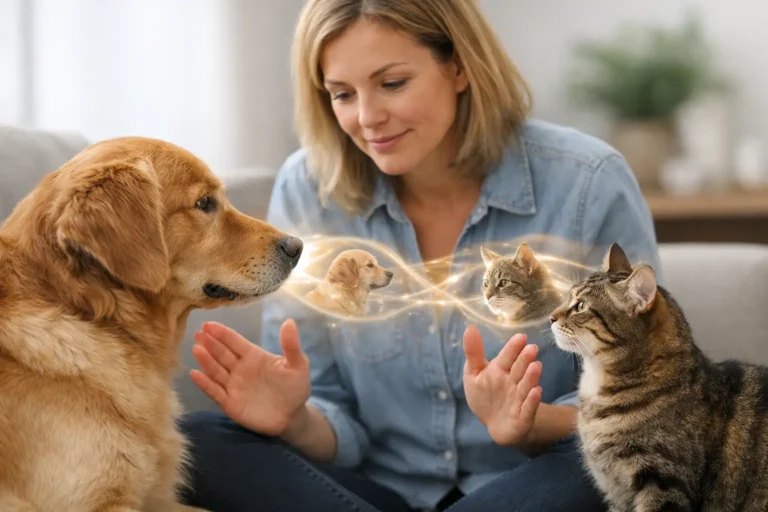
When your pet leaves this world, the silence can feel almost unbearable. Their bed is still there. Their routines still echo through the day. And the questions that follow loss can sit heavily on the heart. Animal communication for pet grief can offer a gentle path toward comfort, helping grieving pet parents feel connected to the love that still remains.
For many people, grief after losing an animal is not simple sadness. It is deep, disorienting, and personal. Pets are family. They are companions through ordinary mornings, hard seasons, life changes, and quiet nights when no one else knows what you are carrying. When they pass, the bond does not suddenly disappear. Love continues, even when the physical presence is gone.
That is often why grief feels so layered. You may be mourning their absence, but you may also be carrying guilt, confusion, or unfinished emotions. Did they know how much you loved them? Were they at peace? Did you make the right choices at the end? Are they still with you in some way? These are sacred questions, and they deserve tenderness.
How animal communication for pet grief can help
Animal communication for pet grief is not about replacing the grieving process or rushing you past it. It is about creating space to hear what your pet may want you to know now. For many pet parents, that includes reassurance, emotional clarity, and a sense of peace that has felt out of reach.
Animals often come through with a perspective that is loving, simple, and deeply wise. They may share how they experienced your relationship, what they want you to release, or how they are still supporting you in spirit. Sometimes the message is very specific. Sometimes it is more energetic than verbal, arriving as a calm certainty in the body and heart.
This kind of connection can be especially meaningful when grief has become tangled with self-blame. Many loving pet parents replay the final days or decisions again and again. They wonder if they waited too long, acted too soon, missed a sign, or failed their companion somehow. A communication session may help soften that inner torment by bringing through your pet’s own experience of the bond, the transition, and the love they still hold.
That does not mean every session feels dramatic or gives every answer. Sometimes healing comes through one clear message that lands exactly where it is needed. Sometimes it comes through being witnessed in your grief while honoring your pet as a sentient soul whose voice still matters.
What grief really asks for
Grief is not a problem to fix. It is love looking for a place to go.
When people seek support after pet loss, they are often not looking for abstract spiritual ideas. They are looking for relief from the ache of separation. They want to know their animal is okay. They want to feel that the relationship still has meaning. They want permission to trust what they have sensed in dreams, signs, or quiet moments when their pet felt close.
That is where intuitive support can feel so different from standard advice. A well-meaning friend may tell you to get another pet or focus on happy memories. But grief does not always respond to logic. It responds to safety, truth, and connection.
Animal communication meets that need in a heart-centered way. It honors that your relationship with your pet was real, sacred, and still energetically alive. For spiritually open pet parents, this can feel like being able to breathe again. For those who are newer to intuitive work, it may simply feel like a compassionate way to hear what their heart has been hoping is true.
What a passed pet may communicate
Every animal is unique, so no two sessions are exactly alike. Still, certain themes often come through in passed pet readings.
Many pets communicate that they are no longer in pain and that their transition was peaceful from the soul level, even if the physical experience was difficult to witness. Others focus on the love they received in life, wanting their person to know they felt cared for, cherished, and understood more than the human may realize.
Some animals address the final decision around euthanasia with remarkable grace. They may show that they understood your intention, that they felt your love in those last moments, and that they do not want you carrying guilt as proof of devotion. That can be profoundly healing for someone who has been silently suffering.
Others may bring forward memories, personality traits, or small details that remind you this is still your animal – still the same spirit, the same humor, the same affection, the same bond. That recognition matters. It can shift grief from pure heartbreak into continued relationship.
When this support is most meaningful
There is no perfect timeline for reaching out. Some people seek animal communication within days of a loss because the pain is fresh and overwhelming. Others wait months or years, only realizing later that their grief still needs a place to be held.
Both are valid.
If you are feeling stuck, haunted by unanswered questions, or unable to find peace around your pet’s passing, this kind of support may help. It can also be meaningful if you are sensing your pet around you and want reassurance that what you feel is real. Dreams, repeated signs, a familiar presence in the home, or sudden waves of comfort may all feel significant after loss.
At the same time, it helps to come with a soft grip rather than a rigid script. Sometimes the message you most want is not the one that comes through first. Animals often communicate what matters most for healing, not just what the human mind wants confirmed. There is wisdom in that, even when it asks for patience.
Animal communication for pet grief and emotional healing
One of the most beautiful parts of animal communication for pet grief is that it can restore a sense of relationship instead of forcing a sense of ending. Your pet may no longer be here physically, but connection does not have to be over.
That does not mean grief disappears. Love this deep still aches. You may still cry when you see their photo or reach instinctively for their leash. But healing can begin to feel less like letting go and more like learning a new way to stay connected.
For some, that means feeling their pet’s presence during quiet moments. For others, it means releasing guilt, honoring shared memories, and trusting that the bond continues beyond the body. A compassionate session can support that shift by helping you hear what they have to say from the other side of loss.
This is especially powerful for people who have felt dismissed in their grief. Pet loss is sometimes minimized by others, even though the heartbreak is real and life-altering. Being able to speak openly about your pain, while also receiving intuitive insight, can be deeply validating. It says your love matters. Your grief matters. Your animal matters.
A gentle way to approach a session
If you are considering a session, try to arrive with openness, honesty, and self-compassion. You do not need to have perfect spiritual language or know exactly what to ask. You can simply bring your heart.
It may help to reflect on what feels unresolved. Maybe you need comfort around their passing. Maybe you want to know if they forgave a difficult choice. Maybe you long to feel their personality again, even for a moment. Those intentions are enough.
It is also okay if part of you is hopeful and another part is uncertain. Grief often makes people tender, protective, and deeply vulnerable. A trustworthy practitioner will honor that. The goal is not to pressure belief. The goal is to create a safe space for healing, connection, and peace.
For pet parents seeking that kind of sacred support, Animal Communication with Tori offers a compassionate space to connect with the wisdom, love, and presence of animals in spirit.
Your grief is not a sign that you should be over it by now. It is a sign that the bond was real. If your heart is still listening for your pet, there may be comfort in knowing love can still speak.