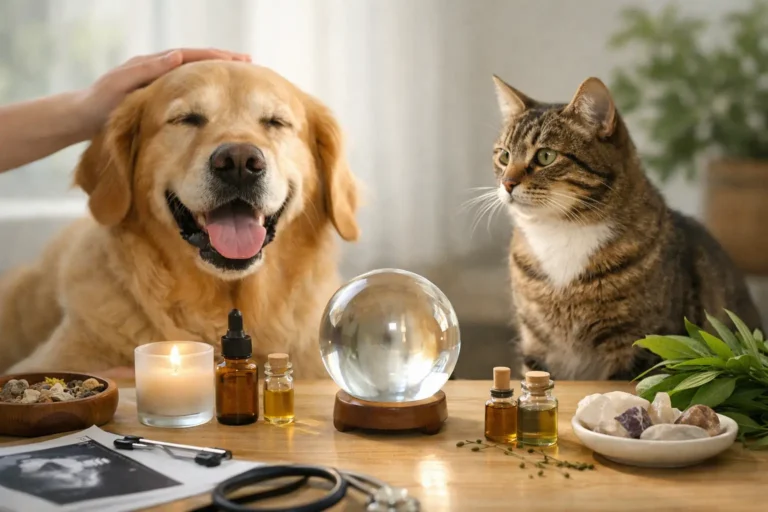
If you have ever looked into your animal’s eyes and felt there was more they wanted you to understand, this animal communication guide for beginners is for you. Many pet parents already sense that their animals are speaking all the time – through emotion, energy, images, and quiet knowing. Learning to listen is less about forcing a gift and more about softening enough to hear what has always been there.
Animal communication can feel deeply natural and strangely vulnerable at the same time. You may wonder whether you are imagining things, projecting your own feelings, or simply hoping for reassurance. That uncertainty is common, especially at the beginning. The good news is that a gentle, grounded approach can help you build trust in your own connection without turning it into a performance.
What animal communication means
At its heart, animal communication is a quiet exchange between you and your pet that goes beyond spoken words. Many people experience it as receiving feelings, mental pictures, body sensations, words, or a sudden inner knowing. Animals are sentient beings with their own personalities, preferences, emotions, and spiritual presence. When you approach them with respect, they often respond in ways that are surprisingly clear.
This does not mean every thought in your mind is a message from your pet. Real communication usually feels simple, direct, and emotionally clean. It may arrive in a way that seems almost too ordinary to matter. A flash of an image, a sense of discomfort in one area of the body, or a strong feeling of yes or no can be the beginning.
Animal communication guide for beginners: start with presence
Beginners often think they need to try harder. In most cases, the opposite is true. Animals respond best when your nervous system is calm, your expectations are soft, and your heart is open.
Start by sitting near your pet in a quiet moment. Put your phone away. Let your breathing slow down. Notice your animal without asking anything at first. Watch how they rest, move, and hold their energy. This matters because communication begins with relationship. Before you try to receive a message, let your animal feel that you are truly with them.
Then, silently greet them. You do not need special words. A simple inward hello is enough. You might say, “I’m here. I would love to understand you better. Please share what you want me to know.” Keep it warm and honest.
How messages may come through
There is no single right way to receive communication. Some people are naturally visual and receive images. Others feel emotions in their own body, hear phrases in their mind, or suddenly know something they did not know a moment earlier.
If your dog sends an image of the front door, that may relate to wanting a walk, feeling anxious when people leave, or remembering a moment connected to that place. If your cat gives you a heavy feeling in your stomach, it may point toward stress, physical discomfort, or an emotional issue that needs attention. Context matters. So does humility.
This is where many beginners get tripped up. The first impression is often the clearest, but interpretation is where the mind can take over. Try to separate what you received from what you think it means. Write down the raw message first. Meaning can unfold afterward.
Your imagination is not the enemy
One of the biggest fears around intuitive work is, “What if I’m making it up?” The truth is, intuitive perception often uses the same inner screen as imagination. That does not automatically make it false. Instead of treating imagination as proof that nothing real happened, consider it the language through which subtle communication is translated.
What helps is noticing the quality of what you receive. A genuine message often arrives quickly, gently, and without much drama. It may surprise you. It may not match what you expected or wanted to hear. That kind of neutral clarity is worth paying attention to.
Ask simple questions
When you are new, keep your questions clear and kind. Animals tend to respond well to straightforward communication. Ask one thing at a time and leave room for silence.
Good beginner questions include: How are you feeling today? Is there something you want me to understand? What helps you feel safe? Is there anything about your routine you want to change? If your pet has been struggling, you can ask, What is this behavior trying to express?
Try not to cross-examine. Animals are sensitive to pressure. If your energy becomes tense or demanding, the connection can feel muddy. Think of it as a conversation rooted in trust, not a test you need to pass.
Let your pet answer in their own way
One of the most healing parts of this work is realizing your animal may answer differently than you expect. A pet dealing with behavior changes may not focus on the behavior itself. They may show you loneliness, overstimulation, grief, or confusion. A senior pet may communicate peace even when you are carrying fear. A passed animal may bring love first and explanation second.
This is why emotional openness matters. If you only listen for the answer you want, you can miss the deeper truth your animal is offering. Their perspective is often simple, wise, and centered in the present moment.
Animal communication guide for beginners: practice without pressure
If you want to strengthen your connection, consistency helps more than intensity. Short, loving practice sessions are often better than long efforts filled with doubt. Spend a few minutes a day connecting with your pet when both of you are relaxed.
You can also practice with animals in everyday life. Notice what you sense from a bird outside your window, a horse in a pasture, or a friend’s dog. Stay respectful and light with it. The goal is not to prove anything. The goal is to refine your awareness.
A journal can help more than most people expect. Record the date, the animal, what you asked, and exactly what you received. Later, notice what was confirmed through behavior, timing, or shifts in your pet. Validation builds confidence, and confidence makes it easier to stay open.
What gets in the way
Strong emotion can cloud communication. If you are panicked about a missing pet, heartbroken over a health crisis, or desperate for a certain answer, your own feelings may come through louder than the message. That does not mean you are failing. It means you are human and deeply bonded.
In those moments, it can help to pause and tend to yourself first. Breathe. Ground. Place a hand over your heart. You may receive more once your body feels safer. And sometimes, when the stakes are high, compassionate outside support is the kindest choice.
When to seek guidance from a professional
There is real beauty in learning to hear your own animal more clearly. There is also wisdom in knowing when you want help. If your pet is dealing with persistent behavior issues, emotional distress, end-of-life transitions, grief after passing, or a disappearance, working with an experienced communicator can offer clarity and comfort when your own emotions are too close to the situation.
A professional session does not replace veterinary care, training, or practical action. It can complement them by bringing forward the emotional and energetic perspective of the animal. For many pet parents, that creates relief, harmony, and a stronger sense of trust in the bond they already feel.
If you are called to deepen this connection and want gentle support, Animal Communication with Tori offers a compassionate space to hear what your pet may be trying to share.
Trust the bond you already have
You do not need to become someone else to begin. You do not need perfect stillness, special rituals, or a dramatic spiritual moment. Most often, animal communication begins in the quiet places – while sitting beside your dog as they nap, while watching your cat settle into your lap, while whispering goodnight to the animal who has shared your heart.
Your pet already knows your energy. They know your love. Beginning this practice is simply a way of honoring the sacred bond that is already alive between you. Go gently. Stay curious. Let it be simple enough to be real.
Sometimes the first true message is not a sentence at all. Sometimes it is the feeling that your animal has been with you, speaking in love, all along.